Power Bank for iPhone: A Complete Guide to Choosing the Right One
A power bank for iPhone is a useful accessory for anyone who wants extra battery life while traveling, working, studying, or spending long hours away from a wall charger. Modern iPhones offer good battery performance, but heavy use of apps, cameras, gaming, streaming, navigation, and mobile data can drain the battery quickly. A reliable power bank can provide convenient backup power whenever you need it.
Why Use a Power Bank for iPhone?
An iPhone power bank gives you the freedom to charge your phone almost anywhere. Whether you are traveling, attending an event, or simply away from a power outlet, a portable battery can help keep your iPhone running.
A good power bank should be compact, dependable, and compatible with your iPhone. Depending on the model, you may choose a wired power bank with a USB-C connection or a magnetic wireless option designed for convenient charging.
Choose the Right Capacity
Power banks are commonly measured in milliamp-hours (mAh). The capacity you need depends on how often you want to recharge your iPhone.
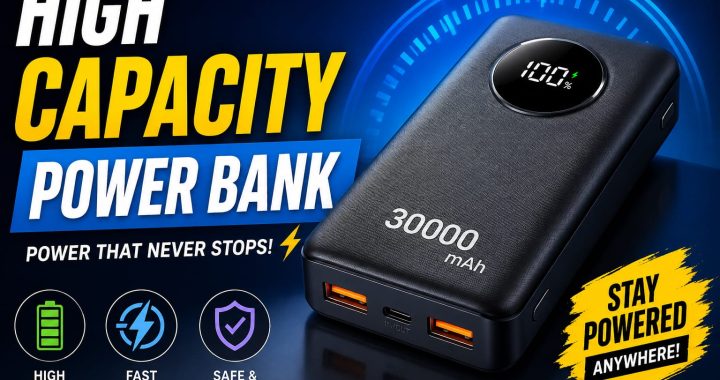
For occasional emergency charging, a smaller power bank can be convenient because it is lightweight and easy to carry. A medium-capacity model can provide more backup for a full day away from home. Larger power banks are useful for long trips, but they are generally heavier.
When choosing a power bank for iPhone, remember that the advertised capacity does not translate directly into the exact amount of battery charge delivered to your phone because some energy is lost during voltage conversion and charging.
Wired Charging Options
Wired charging is usually a practical choice when you want efficient and dependable charging. Depending on your iPhone model, you should check which cable and connector are required.
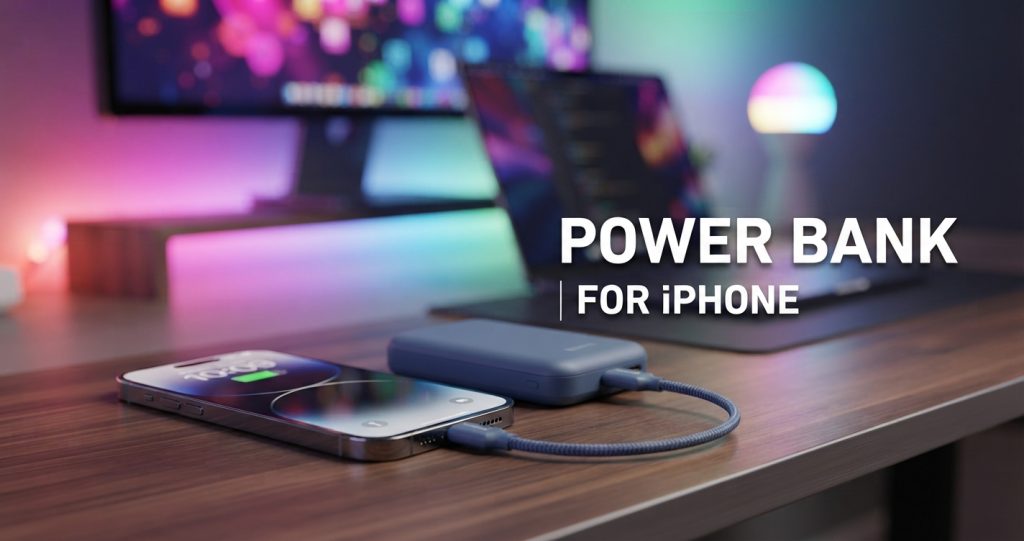
USB-C power banks can be particularly convenient for newer iPhones because a compatible USB-C cable can connect directly to the phone. Another benefit of wired charging is that it can generally provide faster charging than basic wireless charging, depending on the power bank and iPhone.
Before purchasing, check the power bank’s output specifications and make sure they support the charging requirements of your particular iPhone.
Magnetic Wireless Power Banks
Magnetic wireless power banks are designed for convenience. They can attach magnetically to compatible iPhone models, reducing the need to carry a separate cable while charging.
This type of power bank for iPhone can be especially useful when you are walking around or using your phone while it is being charged. However, wireless charging can produce more heat and may be less efficient than wired charging.
If you choose a magnetic model, verify that it is compatible with your iPhone generation and supports the appropriate wireless charging standard.
Look for Fast Charging
Fast charging can make a major difference when you have limited time. Instead of leaving your phone connected for a long period, a suitable high-output power bank can provide a useful battery boost relatively quickly.
Look for information about the power bank’s maximum output, supported charging protocols, and cable compatibility. The actual charging speed will depend on the iPhone model, battery condition, cable, charger technology, and power bank.
Size and Portability
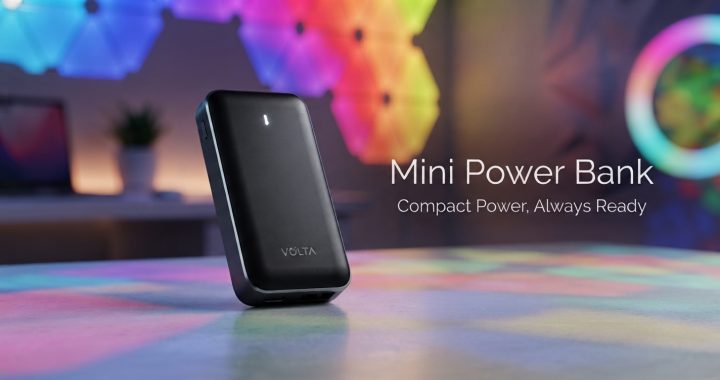
A power bank should be easy to carry. If you mainly need emergency charging, a slim model may be more practical than a large-capacity battery.
For travel, consider the size and weight along with capacity. A compact power bank for iPhone can fit easily inside a backpack, laptop bag, or pocket while providing additional battery life during the day.
Safety Features Matter
Safety should be an important consideration when purchasing a power bank. Look for products from reputable manufacturers that include protections such as overcharging, overheating, short-circuit, and over-current protection.
Avoid extremely cheap or unknown products with unclear specifications. A quality power bank should clearly provide information about its capacity, input, output, safety features, and certification where applicable.
Power Bank for Travel
Traveling with an iPhone can increase battery usage because you may use maps, cameras, mobile data, translation apps, and entertainment throughout the day. Carrying a portable battery can reduce the worry of finding a power outlet.
For travel, consider a capacity that fits your needs while remaining easy to carry. If you are flying, also check your airline’s current rules regarding portable batteries and carry-on luggage before your trip.
How to Choose the Best Power Bank for iPhone
When comparing different models, consider these factors:
- Capacity: Choose a capacity suitable for your daily usage.
- Charging speed: Check the supported output and fast-charging standards.
- Compatibility: Make sure it works with your iPhone model.
- Connector: Check whether you need USB-C or another cable.
- Wireless support: Consider magnetic wireless charging if convenience is important.
- Size: Choose a portable design that you will actually carry.
- Safety: Look for reliable protection features.
- Build quality: A durable exterior can make the power bank better suited for travel.
- Brand reputation: Buy from a reputable manufacturer or retailer.
Final Thoughts
A power bank for iPhone can be an excellent everyday accessory for keeping your phone powered when a wall charger is not available. The ideal option depends on your iPhone model, charging preferences, required capacity, portability needs, and budget.
For everyday use, a compact power bank may be enough for emergency charging. If you travel frequently, a higher-capacity model can provide more backup power. Magnetic wireless models offer added convenience, while wired USB-C options can provide a straightforward charging experience.
Before buying, always check compatibility, charging specifications, capacity, safety features, and the manufacturer’s recommendations. Choosing the right power bank can make it much easier to keep your iPhone charged throughout the day.